  |
 |
  |
|
||
  |
|
  |
|
||
  |
|
  |
|
||
  |
|
  |
• To gather and analyse economical and statistical data related to forging, casting, mold-making and prototyping activities, at national and international levels
• To deliver truthful performance analysis and forecasts, by production technology, by alloy category, by market segment…
• To build and maintain quantitative databases allowing for a regular follow-up or key indicators to our profession; to complete dashboards for the working groups put in place by the Federation and its members
• To address our company members’ requests for documentation on foreign macroeconomic data
• To lead working groups dedicated to technologies, markets
• To define and initiate collective research projects to be carried out with forging and casting technical centers
• To relay information and actions implemented by the European organization for forging, casting, molds and prototyping
• To participate as a full partner in collective actions related to energy and raw materials
• To assist our member companies in the implementation of their recruitment policy by giving more visibility to their job offers, encouraging job placement for young graduates and animating a working group dedicated to human resources management
• To ensure a balance between qualification requirements and training programs through permanent dialogue with and between various training institutions
• To help our member companies to implement the collaboration agreements signed with the Ministry of National Education
• Deliver technical advice to our member companies on issues related to their activity: seek for suppliers, technical surveys and reports, technological alternatives…
• To relay customer sectors’ requests for quotation to our company members
• To lead thematic commissions on maintenance, production, security… at production sites
• To monitor regulatory and technological changes
• To take part in national and European research projects, to lead collective actions for energy and process efficiency progress
• To coordinate specialists and academic staff’s contributions to La Revue Forge Fonderie, relying on an extensive network of researchers from France and Europe
• To ensure and enhance the public visibility of our profession and members, also with client sectors
• To make available various communication supports in order to project a consistent and positive image of our jobs and careers, and highlight the major contribution of our members’ activity to various industries
• To assist and represent our members at key tradeshows to their activity
• To design and publish the Revue Forge Fonderie
• To train our member companies and raise their awareness about essential legal reflexes for them to secure their business activity
• To assist them in the study and defence of their rights and interests
• To inform them of the latest regulatory, judicial and policy changes which can impact their business activities
• To represent them before public authorities and client sectors (by leading commissions) on tax, legal and contractual issues
• To pilot updates and changes in all standard-form contracts used by European foundries and forging companies
• To lead a think tank for and with our members and partners on the challenges and impacts of digitalisation on forging, casting and prototyping industries; to explain the strategic stakes of these changes during working sessions, sites visits, conferences
• To allow our member companies executives to enhance their strategic vision while taking fully into account these impacts of digitalization
• To promote the interests of the profession by taking a direct part in drafting the new regulatory texts through working groups led by the French Ministry of Environment
• To guide our members through the implementation of new regulatory changes in their production sites, thanks to our industrial expertise
• To pass on to our members useful and relevant information related to EHS issues: new regulatory contents, new industry guides, best practice exchanges, participation in themed events (guest speakers, sites visits…)
• To lead an efficient network of professionals in EHS so that it can benefit to our members, in particular through the Environment Commission that consists in EHS managers who share their work on thematic issues
| News |
 |
|
September 3 2026
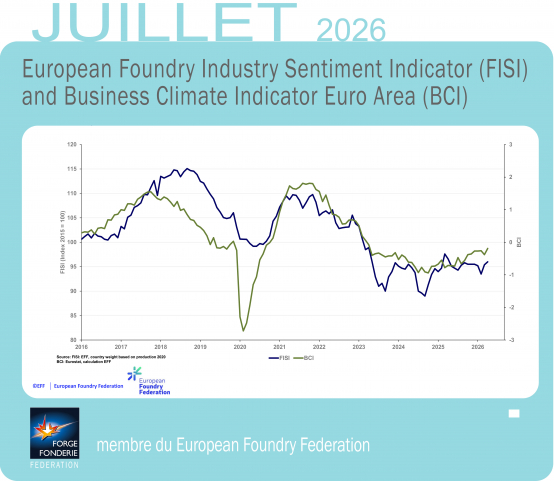
European Foundry Industry Sentiment in July 2026
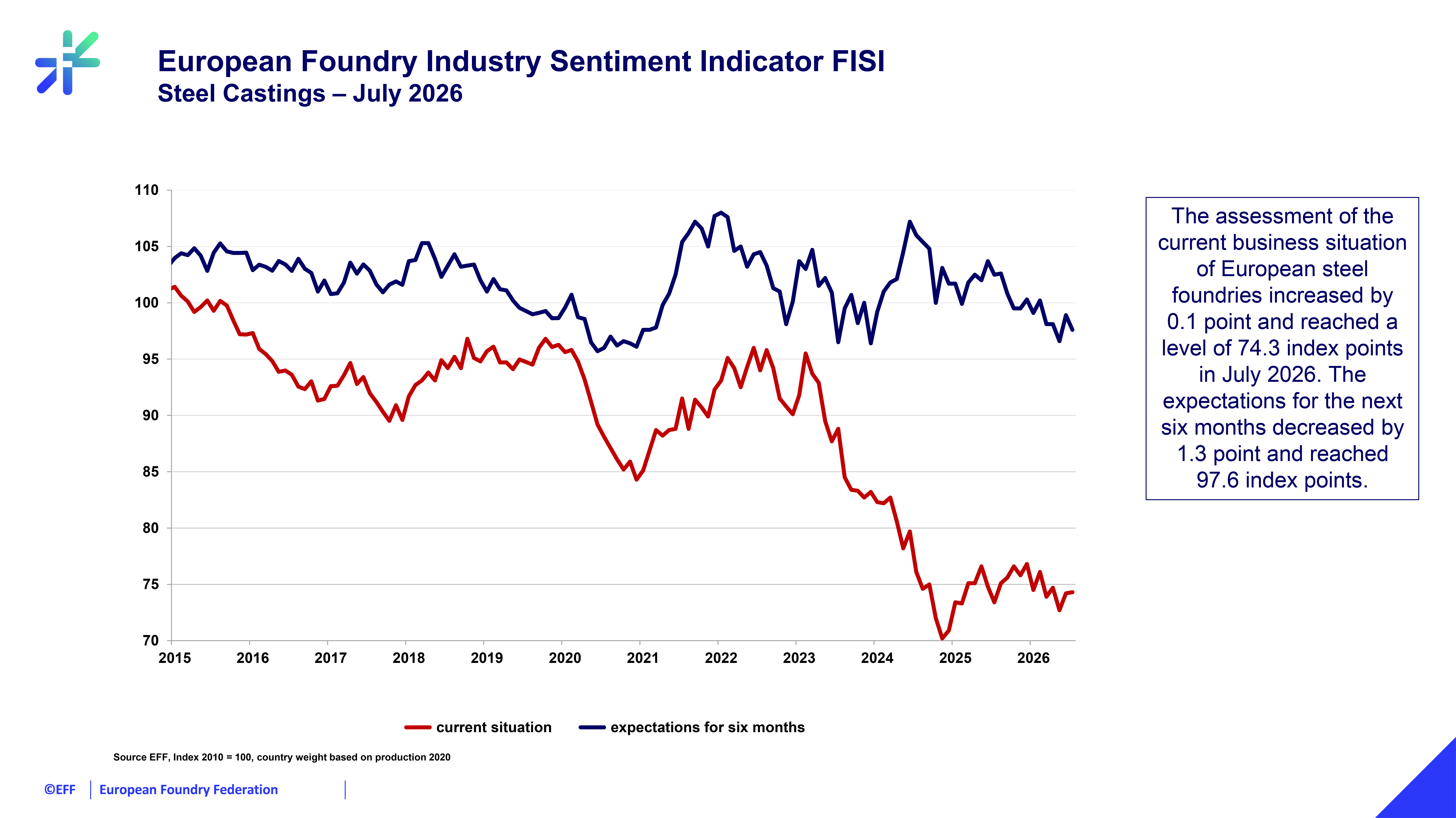
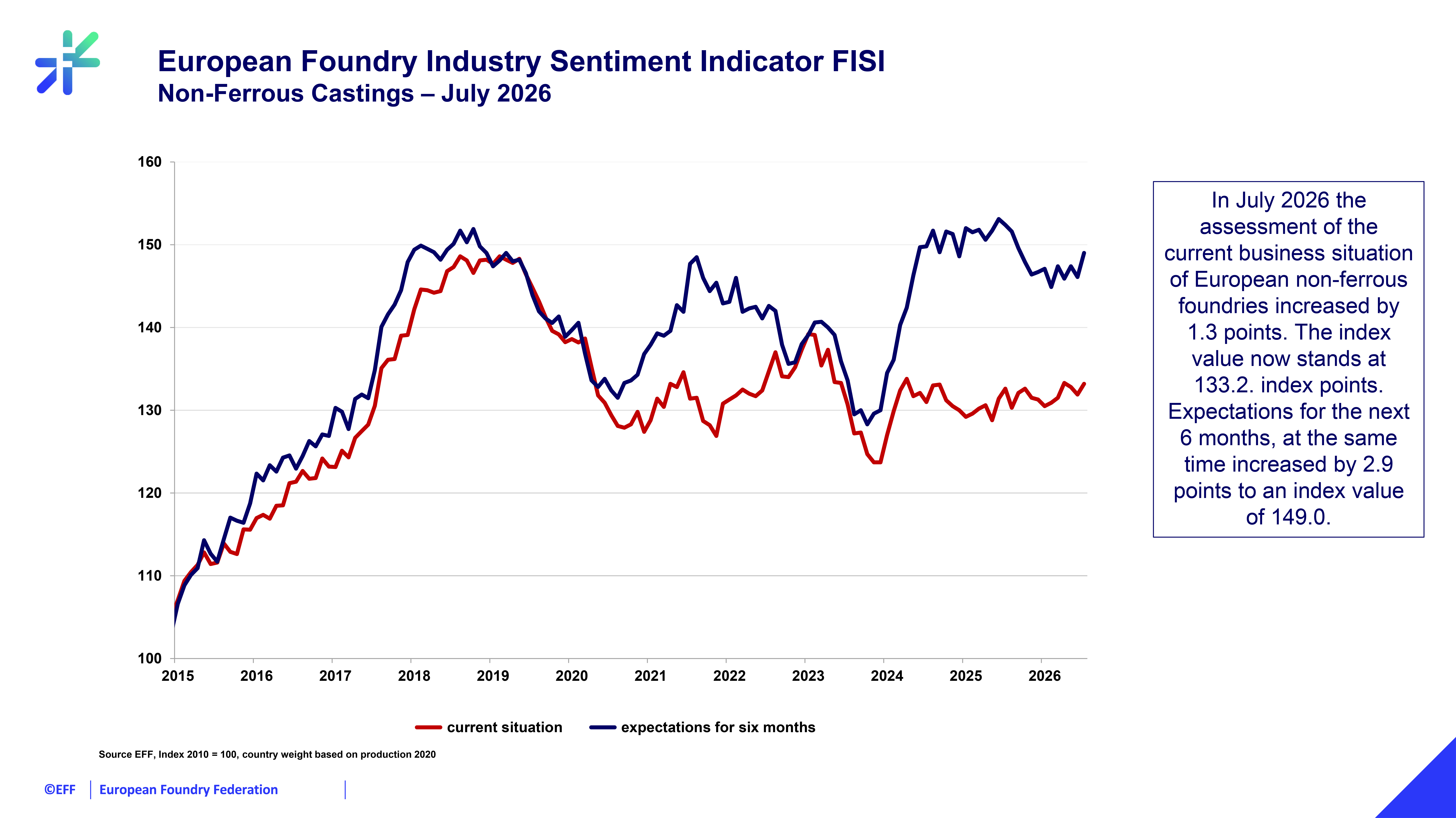
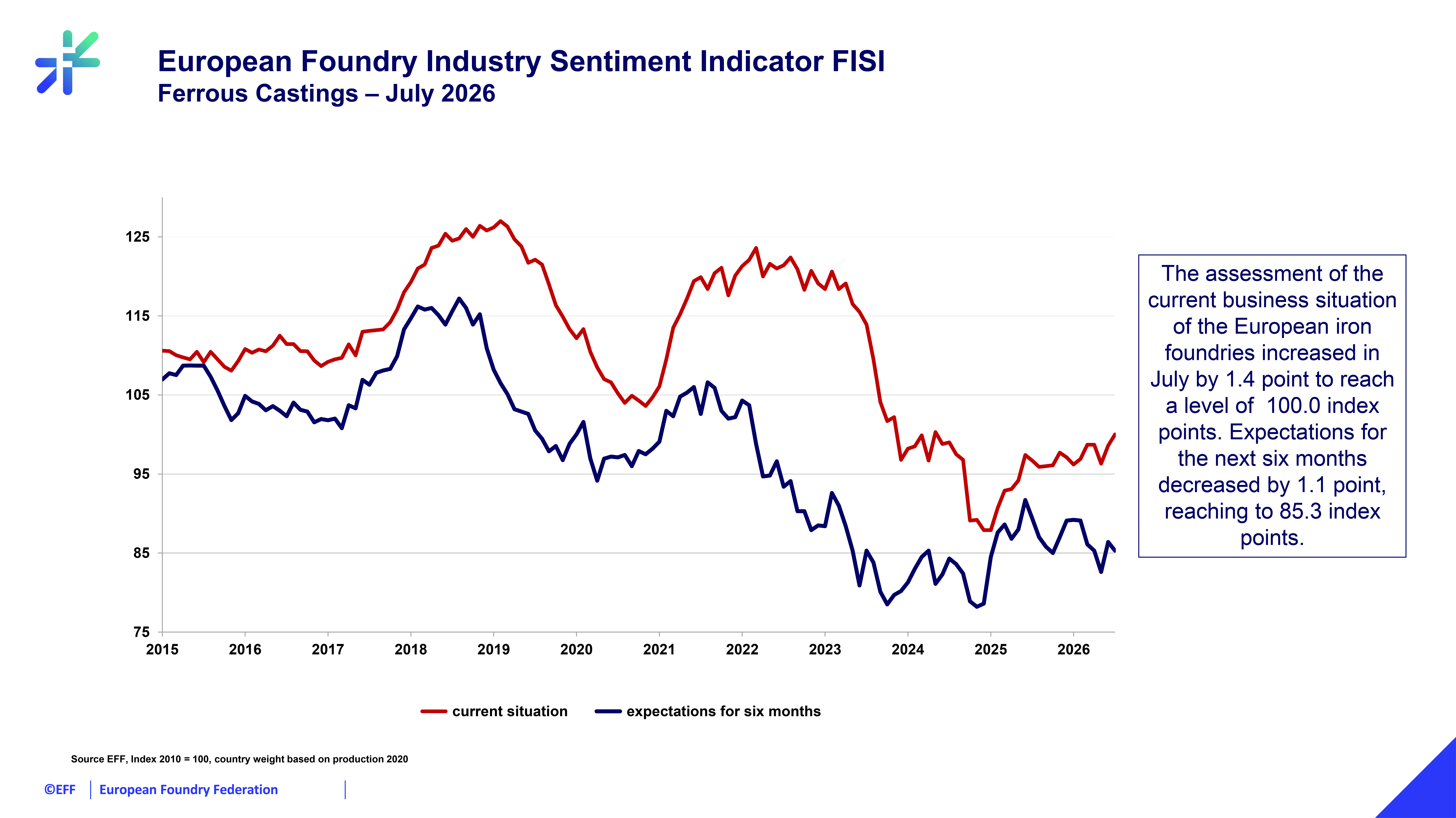
European Foundry Industry Sentiment improves in July 2026, but recovery remains uneven. FISI rises to 96.0 as Eurozone manufacturing continues to expand.
|
| Read more |
| Directory |  |
| Forge Fonderie Magazine |
 |
| Indicators | |
| Press Room | |
| Join us | |
© 2016 Fédération Forge Fonderie - Credits & legal notice