|
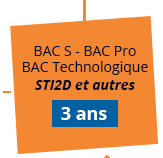
AFTER THE FRENCH CERTIFICATE OF GENERAL EDUCATION
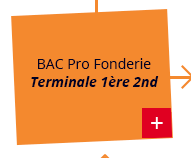
AFTER A VOCATIONAL BACCALAUREATE
AFTER AN ADVANCE FORGE/FOUNDRY VOCATIONAL DIPLOMA...
YOU ARE SEAKING FOR A JOB...
|
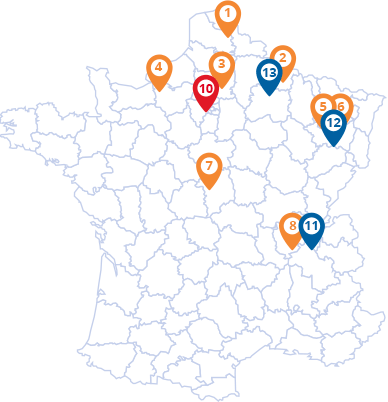
 +33 (0)3 20 48 43 43
Bac Pro Fonderie / BTS Fonderie
2. LYCEE FRANÇOIS BAZIN, Charleville-Mézières (08)
+33 (0)3 24 56 81 56
Bac Pro Fonderie / BTS Fonderie
3. LYCEE MARIE CURIE, Nogent-Sur-Oise (60)
+33 (0)2 35 72 69 11
Bac Pro Fonderie / BTS Fonderie / BTS Forge
4. LYCEE COLBERT, Le Petit-Quevilly (76)
+33 (0)2 35 72 69 11
Bac Pro Fonderie
5. LYCEE HENRI LORITZ, Nancy (54)
+33 (0)3 83 36 75 42
Bac Pro Fonderie / BTS Fonderie
+33 (0)3 83 35 25 73
Bac Pro Fonderie / BTS Fonderie
7. LYCEE HENRI BRISSON, Vierzon (18)
+33 (0)2 48 52 74 00
Bac Pro Fonderie / BTS Fonderie
8. LYCEE HECTOR GUIMARD, Lyon (69)
+33 (0)4 72 71 50 00
Bac Pro Fonderie / BTS Fonderie / CAP Métiers d’Art
9. LYCEE JEAN DUPUY, Tarbes (65)
+33 (0)5 62 34 03 74
Bac pro Fonderie / BTS Fonderie (par apprentissage)
10. ESFF - Ecole Supérieure de Fonderie et de Forge Sèvre (92)
 +33 (0)1 55 64 04 40
Diplôme d’Ingénieur / Année de Spécialisation
En convention avec l’Ecole Nationale supérieure d’Arts et Métiers
 +33 (0)4 78 77 04 56
Licence Professionnelle Conception et processus de mise en forme des matériaux – Spécialité Fonderie : de l'alliage liquide aux propriétés des pièces finies
En partenariat avec FORMASUP
12. UNIVERSITE DE LORRAINE, Nancy (54)
+33 (0)3 83 58 42 12
Licence Professionnelle Conception et processus de mise en forme des matériaux – Spécialité Métallurgie, traitement des alliages
13. UNIVERSITE DE CHAMPAGNE ARDENNE, Reims (51)
+33 (0)3 24 59 64 80 (ou - 64 70)
Licence Professionnelle Conception et processus de mise en forme des matériaux – Spécialité Métallurgie, Forge , Fonderie , emboutissage
En partenariat avec l’IFTS (Charleville Mézières)
+33 (0)1 55 23 24 24+33 (0)3 62 59 52 12+33 (0)3 24 56 42 87+33 (0)3 22 82 37 09+33 (0)3 83 36 89 11+33 (0)3 83 35 25 73+33 (0)2 38 83 48 26+33 (0)4 72 66 48 62+33 (0)5 62 34 03 74+33 (0)3 25 07 52 00
   |
 |
|
||||||||||||
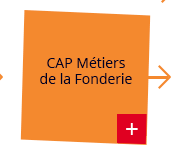
Un CAP est une formation de 2 ans. Elle se fait après la 3ème, à temps plein au lycée ou dans le cadre de l’apprentissage. Elle apporte à son titulaire un niveau d’emploi qualifié et permet d’acquérir la formation nécessaire pour entrer dans la vie active. Ce CAP est uniquement validé dans le cadre du BAC PRO Fonderie. Les épreuves pour obtenir ce diplôme ont lieu en deuxième année du BAC PRO.
ADMISSION Avoir un niveau de Troisième
DEBOUCHES Ces diplômes positionnent leurs titulaires sur les métiers et activités de moulage et de conduite des installations dont disposent les unités de production de pièces moulées : agent polyvalent de production, opérateur fonderie, mouleur-noyauteur (en fonderie sur modèles, en moules non-permanents), conducteur d’installation…
Il n’existe pas de CAP spécifique au domaine de la Forge.
APRES UN DIPLÔME EN FONDERIE : le CAP mouleur-noyauteur (produits d’art et d’ornement)
Ce diplôme s’adresse à des professionnels en fonderie (de niveau CAP ou Bac Pro minimum) ,des salariés ou à des adultes en reconversion qui souhaitent se spécialiser en fonderie d’art. Il se prépare en 1 an uniquement au lycée Hector Guimard à Lyon.

Le Bac Pro Fonderie se prépare après un CAP ou directement après la classe de 3ème en 3 ans en lycée professionnel à temps plein ou dans le cadre d’un contrat d’apprentissage. Il apporte une qualification supérieure qui vous permet d’être directement opérationnel en entreprise.
ADMISSION - Être titulaire d’un CAP de la fonderie ou d’une autre activité industrielle (formation en 2 ans)
- Directement après la classe de 3ème (formation en 3 ans)
DEBOUCHES Le titulaire de ce diplôme est un technicien d’atelier capable d’effectuer des tâches dans les services de préparation et d’organisation du travail, les laboratoires de contrôles et d’essais, l’atelier (dans le cadre de la production unitaire ou de série, automatisée ou non), y compris la gestion d’une cellule de production et la maintenance préventive.
Il n’existe pas de Bac Pro spécifique au domaine de la forge, mais le Bac Pro Outilleur prépare, entre autres, aux métiers de la forge.
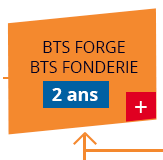
La formation au Brevet de Technicien Supérieur dure 2 ans au lycée à temps plein, ou dans le cadre d’un contrat en alternance. Elle permet de devenir l’expert qui sera amené à exercer de larges responsabilités dans les différents services de l’entreprise (Bureau d’études, méthodes, production, contrôle…) et à assumer des tâches d’encadrement.
ADMISSION - Être titulaire d’un baccalauréat S, technologique, STI2D ou STL ou professionnel.
DEBOUCHES
La formation générale, technique, scientifique, économique et humaine du technicien supérieur de fonderie doit lui permettre dans le cadre des responsabilités dont il a la charge :
- de collaborer et d’apporter son concours aux ingénieurs et responsables des entreprises de fonderie et de participer à des échanges et entretiens avec des spécialistes d’activités connexes,
- de gérer les moyens humains, matériels et informationnels qui concourent à la meilleure compétitivité des entreprises,
- d’encadrer une équipe de fabrication de produits,
- d’exprimer un besoin pour améliorer un système matériel ou organisationnel dans son secteur d’activité,
- de participer à la mise en œuvre de la politique de qualité de l’entreprise
 votre BTS Fonderie au Lycée Marie Curie
votre BTS Fonderie au Lycée Loritz
 Le chef de travaux du Lycée marie Curie à Nogent S/Oise nous parle du BTS Fonderie
Le BTS Forge (ou mise en forme des matériaux par forgeage) est préparé dans un seul établissement en France, le Lycée Marie Curie à Nogent Sur Oise (60).
votre BTS Forge au Lycée Marie Curie
L’objectif est de former un profil « d’assistant ingénieur » apte à seconder un ingénieur en R&D ou un ingénieur de production dans la mise en œuvre de la chaîne de fabrication du produit (élaboration, mise en forme, traitements thermiques et de surface, caractéristiques mécaniques). Ce profil peut être aussi assimilé à un cadre technique chargé de projets dans les bureaux d’études, méthodes, laboratoire et recherche & développement.
ADMISSION
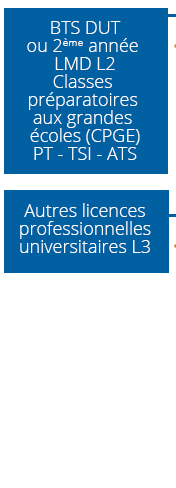
Bac + 2 : Etudiants ayant validé un L2, BTS, DUT technologique et scientifique,
BTS Fonderie
BTS Forge
BTS Traitement des Matériaux, BTS TTS, BTS CPI, BTS CPRP
DUT Science et génie des matériaux ou génie mécanique et productique ou mesure physique.
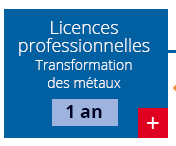
Organisation des études : 430 h en moyenne suivant la licence + une période de stage en entreprise, ou possibilité de suivre cette licence par apprentissage (550h) ou par contrat de professionnalisation.
Formation ouverte en formation initiale et continue, aux salariés des entreprises en formation continue, aux demandeurs d’emploi.
DEBOUCHES
Les débouchés sont nombreux et dans des secteurs de l’industrie très variés : aéronautique, aérospatiale, médical, nucléaire, verre, automobile, construction, énergie, mécanique, environnement, métallurgie, etc...
Votre Licence Professionnelle à l'Université de Lorraine
Votre Licence Professionnelle à l'Université de Reims Champagne Ardenne
Votre Licence Professionnelle à l'Université de Lyon 1
ADMISSION
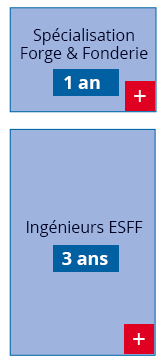
- En formation initiale : après un Bac+2 des filières scientifiques et technologiques (BTS, DUT, CPGE) mais aussi après une licence (L3 ou pro) comme un bachelor d’Arts et Métiers. Présélection sur dossier puis concours d’entrée (admission possible sur dossier pour les licences). Durée des études : 3 ans, cursus de formation sous contrat d’apprentissage.
- En formation continue : la formation continue permet aux salariés, d’une entreprise de fonderie, de forge ou d’une activité connexe depuis au moins deux ans et demi, et titulaires d’un BTS ou d’un DUT de préparer le diplôme d’ingénieur de l’ESFF. L’admission se fait sur dossier et entretiens devant un jury. La durée des études est de 3 ans, la première année est un cycle préparatoire à distance. Les salariés doivent bénéficier d’un congé individuel de formation.
- Une formation en spécialisation est également possible pour les jeunes ingénieurs déjà diplômés. Pour plus d’informations sur cette filière, visitez le site internet de l’ESFF.
DEBOUCHES
L’ESFF forme les ingénieurs et les futurs cadres supérieurs pour les industries de la fonderie, de la forge et de la transformation du métal (fabrication, méthodes, études, gestion de la qualité, direction…), les industries clientes ou fournisseurs des fonderies, des forges…, des centres de recherche professionnels intégrés.
Atouts de l’école
- Une implantation au sein d’un centre de recherche (CTIF)
- Un encadrement exceptionnel des apprentis avec un vivier de tuteurs en nombre égal au nombre d’apprenants et l’affectation d’un référent scientifique pour chaque apprenti
- Des locaux agréables, une résidence à proximité (300 m) et un accès au restaurant d’entreprise du Centre de recherches.
- Un accompagnement individuel pour trouver une entreprise d’accueil
- Un temps moyen de recherche du premier emploi inférieur à 1 mois !
- Une école à taille humaine propice au développement de chaque apprenti, des conditions d’apprentissage de très bonne qualité
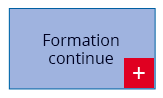
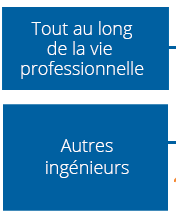
L’évolution des marchés et des technologies conduit les entreprises à développer et à valoriser les compétences de leurs collaborateurs. L’organisation professionnelle facilite l’accès des salariés d’entreprises et des demandeurs d’emploi à des dispositifs adaptés, permettant à chacun de se former tout au long de la vie pour développer son employabilité et favoriser sa mobilité professionnelle.
L’Ecole Supérieure de Fonderie et de Forge (ESFF) propose une filière de formation continue pour préparer au diplôme d’Ingénieur. Cette formation est ouverte aux salariés en poste depuis 3 ans au minimum dans une entreprise de fonderie, de forge ou plus largement relevant des industries de la métallurgie, et titulaires d’un diplôme bac+2 à caractère scientifique ou technologique (BTS, DUT…). Pour en savoir plus, visitez www.esff.fr/filiere/formation-continue.
L’Association de Formation Forge Fonderie (A3F) aide les entreprises à construire et définir les actions de formation pour leurs salariés en établissant des diagnostics, parcours pédagogiques et plans de formation. Sur catalogue ou sur mesure, les formations proposées abordent tous les domaines : de la reprise des fondamentaux aux perfectionnements des métiers en passant par l’organisation et les exigences de productivité. Pour en savoir plus, visitez www.a3f-forge-fonderie.fr/nos-domaines-de-formations.
A3F catalogue des formations 2018
Les Certificats de Qualification Paritaire de la Métallurgie (CQPM) sont un dispositif accessible à un large public permettant de valider des capacités professionnelles. Les CQPM sont ouverts aux jeunes et aux adultes en contrat de professionnalisation, aux salariés des entreprises, aux intérimaires et aux demandeurs d’emploi. Ils peuvent être obtenus à l’issue d’un parcours de formation personnalisé ou par la Validation des Acquis de l’Expérience (VAE). Selon votre situation, vous pouvez y accéder dans le cadre du contrat de professionnalisation, du plan de formation, d’une période de professionnalisation, du compte personnel d’activité, du Congé Individuel de Formation (CIF), de la Préparation Opérationnelle à l’Emploi (POE). Pour en savoir plus, visitez www.cqpm.fr/qualifications.aspx.
CQPM en Fonderie : Mouleur Noyauteur (0154), Opérateur Fusion (0293), Coquilleur (0134), Opérateur en fonderie cire perdue (0155) Conducteur d’installation à mouler les matériaux métalliques sous pression (0117)
CQPM en Forge : Opérateur de transformation métallurgique en forgeage (0066), Technicien(ne) de laboratoire métallurgique des industries de process (0295), régleur de machine de frappe à froid (0149)
| News |
 |
|
September 29 2026
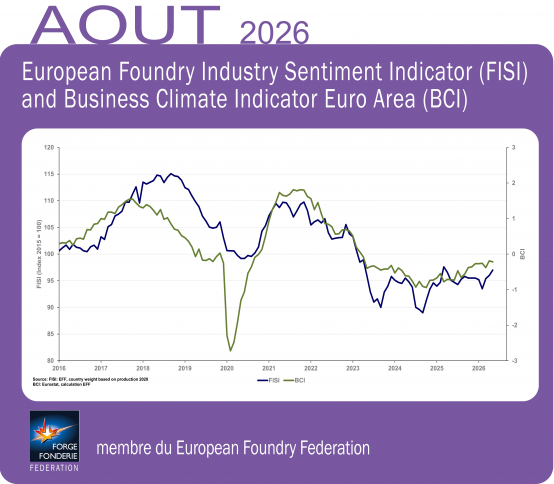
European Foundry Industry Sentiment improves in August 2026
European Foundry Industry Sentiment improves in August 2026 – expectations strengthen, but major differences between foundry segments remain.
Non-ferrous foundries remain the strongest segment
The FISI – European Foundry Industry Sentiment Indicator – is the earliest available composite indicator providing information on the European foundry industry performance. It is published by EFF every month and is based on survey responses of the European foundry industry. The EFF members are asked to give their assessment of the current business situation in the foundry sector and their expectations for the next six months. |
| Read more |
| Directory |  |
| Forge Fonderie Magazine |
 |
| Indicators | |
| Press Room | |
| Join us | |
© 2016 Fédération Forge Fonderie - Credits & legal notice